Introduction: The Challenge of Consistency
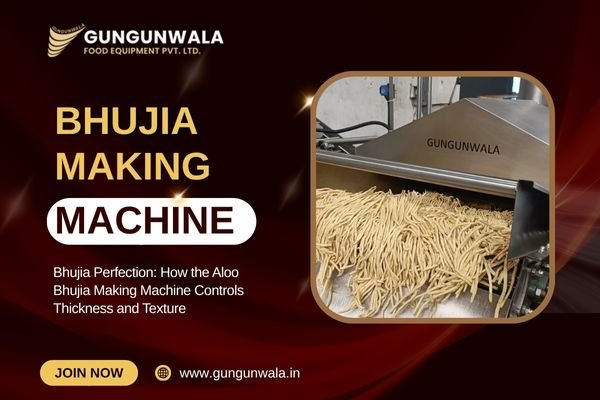
Aloo Bhujia is one of India’s most loved yet technically demanding traditional snacks. Its signature appeal comes from its delicate, melt-in-the-mouth texture and extremely fine, uniform strands. Achieving this consistency on an industrial scale requires precision engineering—not just during frying, but primarily in the design of the Bhujia Extruder Machine.
As an experienced Manufacturer of advanced Namkeen processing equipment, we know that even a minor deviation of 0.1 mm in wire diameter can significantly alter the texture and mouthfeel of Aloo Bhujia. Our extruders are engineered for micron-level accuracy, ensuring every strand maintains the same thickness, density, and crispness—batch after batch.
Here’s how our equipment guarantees unmatched consistency and quality control in large-scale Aloo Bhujia production.
The Bhujia Extruder - The Heart of Texture
Unlike the Rotary Head Extruder used in Kurkure production (which cooks the material under heat and pressure), the Bhujia Extruder is a cold-forming dough machine. It operates under high pressure but without heat, pushing the dough through a precision die directly into the hot oil for frying.
The Role of the Dough Mixer and Consistency
- Dough Preparation: Production begins with an accurate mix of gram flour, potato solids, spices, and water inside a Dough Kneader. The kneader ensures a uniform, lump-free dough with consistent hydration.
- Moisture Control (CRITICAL): Maintaining the right water content is essential.
If the dough is too wet, it collapses in the fryer; if too dry, it causes strand breakage and excess mechanical load on the extruder motor.
The dough’s final consistency directly determines the brittleness and texture of the finished Aloo Bhujia.
The Extrusion Head and Die Plate
- Die Plate: The die plate governs the product’s thickness. It contains numerous fine, precision-drilled holes—typically 0.5 mm to 1.0 mm in diameter.
Quick-change die plates allow operators to rapidly switch between Aloo Bhujia, Fine Sev, or other Namkeen types without major downtime. - Pressure Control: Depending on the model, either a Screw Extruder or a Hydraulic Piston System generates the required extrusion pressure.
Advanced units use PLC monitoring to track motor load and maintain consistent pressure across all die holes—ensuring perfectly uniform strands in every batch.
Achieving the Perfect Strand and Crispness
The journey from the Bhujia Extruder to the final packaged snack involves two crucial technical stages that determine the product’s texture, taste, and overall efficiency of the production line.
1. Frying and Strand Length
- Direct-Drop Frying: The freshly extruded Aloo Bhujia is dropped directly into the Continuous Automatic Namkeen Frying Machine. The impact of the strands hitting the hot oil naturally shears them to the desired length—typically between 1 cm and 3 cm.
- Oil Temperature Control: A precisely regulated Heat Exchanger System maintains oil temperature between 180 °C and 190 °C. If the temperature is too low, the Bhujia absorbs excess oil and becomes soggy. If it’s too high, the outer layer burns before the inner core cooks through. Stable temperature control ensures uniform color, crispness, and minimal oil retention.
2. Oil Absorption and ROI Optimization
Because of its fine, porous structure, Bhujia naturally tends to absorb more oil. Our modern Continuous Fryers are engineered with oil management features that directly enhance product quality and improve your Return on Investment (ROI):
- High Oil Turnover Ratio (OTR): Continuous circulation and filtration keep the oil fresh, resulting in less absorption and a cleaner, lighter product with an extended shelf life.
- De-Oiling Conveyor or Centrifuge: Immediately after frying, a Vibratory De-Oiling Conveyor or Centrifugal De-Oiler removes surface oil efficiently before the product is cooled. This process ensures a non-greasy, crisp texture and significantly reduces both oil usage and packaging costs.
Quality Control for Market Success
To consistently deliver the signature “melt-in-the-mouth” Aloo Bhujia texture, operators must follow a precise Quality Control Protocol. Each stage of production—from extrusion to seasoning—requires careful monitoring and adjustment to maintain uniformity, taste, and visual appeal.
| Quality Parameter | Monitoring Point | Corrective Action |
| Strand Thickness | Bhujia Die Plate | Clean or replace the die plate to maintain consistent strand diameter. |
| Final Crispness | Extruder Dough Mixer | Adjust the dough’s water ratio for optimal brittleness and lightness. |
| Oil Content | Frying Exit / De-Oiling Conveyor | Fine-tune frying temperature or extend de-oiling vibration time for a cleaner finish. |
| Flavor Adhesion | Post-Frying Seasoning System | Use a uniform Rotary Flavoring Drum and finely powdered masala for even coating. |
Strict adherence to these parameters ensures consistent product quality, longer oil life, and superior ROI across every batch.
Consistency is the key to repeat business in the Bhujia market.
Stop struggling with inconsistent Bhujia quality! Our Aloo Bhujia Extruder machines are built with precision pressure control and quick-change die systems. Contact us today for a free texture analysis consultation to achieve perfect Namkeen consistency every time.