Introduction: From Meal to Curl
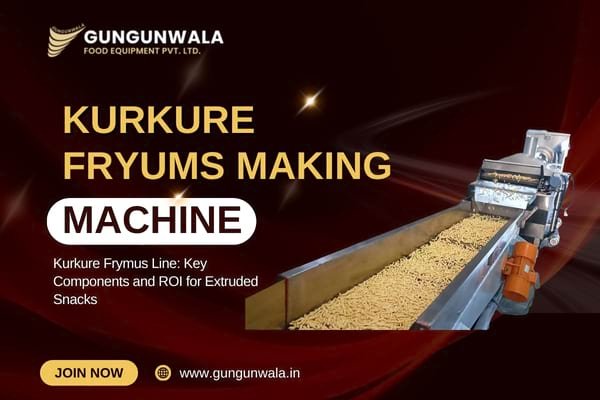
Kurkure and similar extruded snacks (often referred to generically as Frymus) are a triumph of food engineering. Their distinctive, crunchy, and airy texture is not achieved through simple baking or frying, but through a highly controlled process called Extrusion Cooking. This single piece of machinery, the Rotary Die Extruder, transforms a simple meal mix (corn, rice, gram) into a fully cooked, shaped, and expanded product instantly.
As a specialist Manufacturer of this technology, we detail the core working principle that makes the extruded snack line one of the most profitable in the industry.
The Rotary Die and Shape Control
The Rotary Die Head is the innovative component that gives Kurkure its signature irregular curl and shape.
- Fixed Die Plate: Contains the orifices through which the cooked material is forced.
- Rotating Die Fingers/Blades: A separate component that rotates directly behind the fixed die.
- Creating the Curl: The rotation of this inner mechanism twists and shears the hot dough before it fully exits the die. This partial, asymmetrical force results in the distinct corkscrew curl and irregular shape that defines Kurkure. Without this rotary action, the product would emerge as a simple, straight tube.
- Face Cutter Blades: Blades positioned immediately outside the die spin at high speed. They slice the expanded material into the required final length, controlling the snack’s size and mass.
Key Process Parameters for Quality Control
To maintain product consistency and enable quick transitions between snack types (for example, from Kurkure to simple Corn Puffs), operators must precisely monitor and control key extrusion parameters through the integrated PLC System. Each parameter directly influences texture, expansion, and overall product quality.
| Parameter | Impact on Final Product | Control Mechanism |
| Moisture Content | Determines expansion and crispness. Excess moisture leads to soggy, under-expanded snacks, while low moisture results in brittle, dense products. | Controlled via the Pre-Conditioner and automated water dosing in the Flour Mixer. |
| Screw Speed (RPM) | Regulates shear heat and material throughput. Higher RPM increases frictional heat, raising the internal cooking temperature of the dough. | Managed through VFD (Variable Frequency Drive) motor control. |
| Die Aperture | Defines the cross-sectional size and density of the extruded snack. | Adjusted using Quick-Change Die Plates. |
| Face Cutter Speed | Determines the final length and weight of each snack piece. | Controlled via a dedicated VFD on the cutting motor. |
Maintaining precise synchronization among these variables ensures consistent expansion, texture, and shape—the hallmarks of premium extruded snacks. The PLC system provides real-time monitoring and fine-tuning, enabling rapid recipe adjustments with minimal downtime.
Conclusion: Engineering for ROI and Versatility
Ready to unlock the potential of extruded snacks? Our Kurkure/Frymus lines feature advanced PLC control for precise management of shear and pressure. Contact us today for a technical consultation on optimizing your raw material mix for maximum expansion and crunch!